Stop Repeating Debates: Design Critique Methods for Design Teams
Stop Repeating Debates: Design Critique Methods for Design Teams
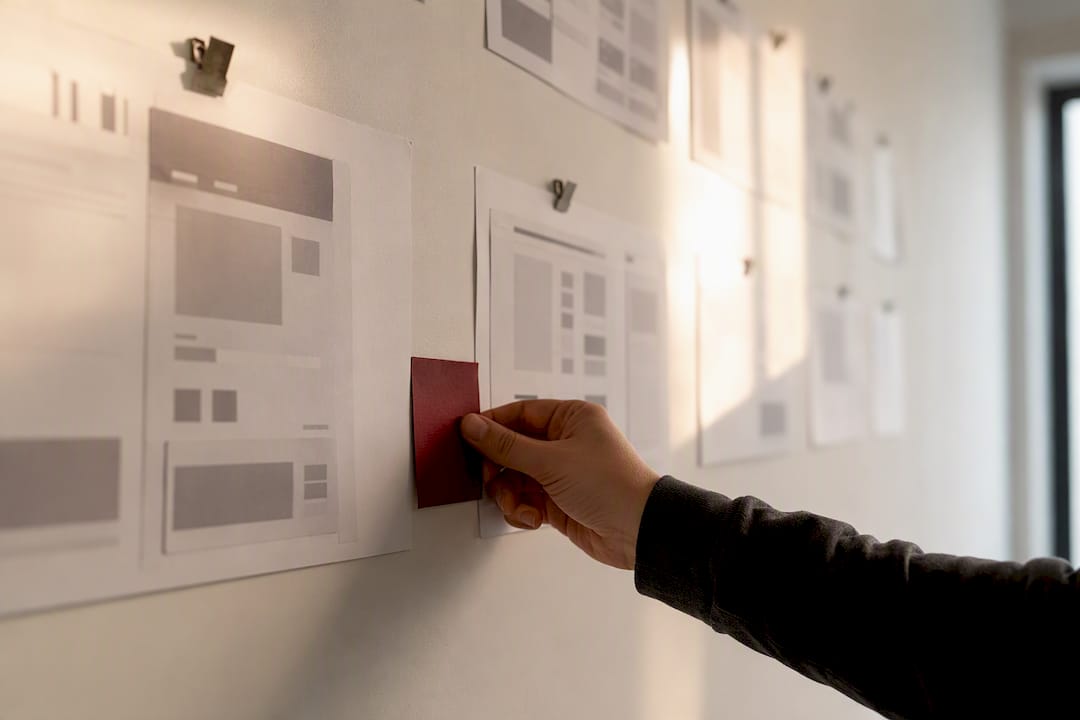
Design critique methods are structured formats for reviewing work in progress. Standard critique, silent critique, pair critique, paper critique, jam sessions, and W.H.Y./Socratic questioning cover most situations a team faces. The rule that makes any of them work: every piece of feedback has to trace back to a goal, a constraint, or a measurable outcome. Skip that rule and you get opinions. Follow it and you get decisions.
TL;DR:
- Using critique methods without a clear goal leads to unfocused opinions rather than actionable decisions, which wastes time.
- Pair and silent critiques are best suited for early-stage work or when quieter voices need amplification, while standard critique fits mid-fidelity, full-group reviews.
- Pre-sharing context and assigning roles like presenter, facilitator, and note-taker significantly improve critique effectiveness and traceability of decisions.
- Conducting critiques frequently during early stages reduces costly rework, but the session outcome depends heavily on a documented record of decisions and next steps.
- Automating decision documentation with tools prevents repeated debates, saves time, and enhances accountability by linking feedback directly to the source.
Table of Contents
- Six Design Critique Methods and When to Use Each
- Matching the Method to the Goal You Actually Have
- Prep Work and Roles That Make a Critique Worth Running
- A Copy-Paste Agenda for Your Next Critique
- Feedback Formats That Don’t Waste Anyone’s Time
- Turning a Pile of Sticky Notes Into a Prioritized List
- Four Ways Critiques Go Wrong (and the Fix for Each)
- How Often You Should Actually Be Running These
- Why the Post-Critique Recap Is the Part Everyone Skips
- What One Small Process Change Actually Fixed for Us
- Capture Every Critique Decision Before It Gets Lost
- Sources
Six Design Critique Methods and When to Use Each
Most teams default to one format, usually a group meeting where everyone talks over the work in real time. That’s fine for some situations and a poor fit for others. Figma’s design team documented six distinct critique formats they rotate between depending on the stage of work and the size of the group, and the variety matters more than any single format.
Standard critique is the one everyone knows: a presenter walks the group through the work, people ask questions, then open discussion follows. It works best for mid-fidelity work where the direction is set but details need scrutiny. The risk is that the loudest voice in the room dominates and quieter contributors never get a word in.
Silent critique flips the order. Reviewers write comments directly on the design (sticky notes on a printout, or comments dropped on a FigJam board) before anyone talks. Everyone reacts to the work itself rather than to whoever spoke first. Figma’s team found that running silent feedback early in a session helps surface patterns during synthesis that a live discussion tends to bury, because quieter reviewers write things they’d never interrupt to say out loud.
Pair critique is two people, one screen, real-time back-and-forth. It’s fast, informal, and works well for early exploration or when a junior designer needs direct mentoring from someone more senior. There’s no agenda beyond “look at this with me.” You lose the diversity of a group review, but you gain speed.
Paper critique forces the group to react to printed, low-fidelity work rather than a polished screen. Printing something rough makes people more comfortable criticizing structure and flow instead of getting distracted by color choices and pixel spacing. It’s a deliberate way to keep early-stage feedback at the right altitude.

Jams and workshops widen the room. Instead of one designer presenting finished work, a jam brings in product managers, engineers, and sometimes customer-facing staff to generate options together, often through quick sketching exercises. Use this format when the problem itself is still undefined, not when you need feedback on an existing solution.
W.H.Y. and Socratic formats (sometimes labeled FYI critiques) strip discussion down to a narrow question: why does this design choice exist? Instead of open commentary, the facilitator or presenter asks pointed questions that force the group toward a specific decision. This format shines when a team is stuck between two directions and needs to resolve the tension quickly, not generate new ideas.
- Standard: mid-fidelity work, full group, open discussion
- Silent: any fidelity, when you need quieter voices heard
- Pair: early exploration, mentoring, fast iteration
- Paper: low-fidelity structural feedback
- Jam/workshop: undefined problems, cross-functional input
- W.H.Y./Socratic: forcing a decision between competing options
Matching the Method to the Goal You Actually Have
Choosing a critique format without naming the goal first is how sessions turn into unfocused venting. A critique aimed at alignment needs a different setup than one aimed at craft polish or a stakeholder sign-off, and conflating them wastes everyone’s time.
If the goal is alignment, you want a standard or W.H.Y. critique with a tight group and a clear question on the table: does this direction solve the problem we agreed to solve? The output should be a decision, not a list of tweaks.
If the goal is craft, silent or pair critique works better. You’re not trying to reach consensus. You’re trying to catch inconsistencies, weak typography, or interaction details that a fast pass misses. The output is a punch list, not a debate.
If the goal is feasibility, bring in engineering early through a jam or a mixed-group standard critique. The output here is a set of open questions and technical constraints, not final decisions, because the design will likely change once those constraints surface.
If the goal is sign-off, keep the group small and senior, and frame the session around a binary: does this ship or not? Vague scope is the fastest way to derail this kind of session, so name the specific decision before anyone opens the file.
- Alignment goal → decisions on direction
- Craft goal → a punch list of specific fixes
- Feasibility goal → open questions and constraints, not final answers
- Sign-off goal → a binary yes or no on shipping
Prep Work and Roles That Make a Critique Worth Running
A critique with no prep work is a guessing game. Sending a 24-hour context share before the session changes what people bring to the room. Reviewers who’ve read the brief in advance ground their comments in project goals and constraints instead of reacting on the spot, which is the difference between useful feedback and surface-level opinion.
That context share should include four things, at minimum:
- A one-paragraph brief describing the problem the work is solving
- The success metrics the design is meant to move
- Known constraints (technical limits, brand rules, timeline)
- What’s explicitly out of scope for this review
Naming what’s out of scope matters as much as anything else on the list. Without it, someone will spend fifteen minutes critiquing a color palette that was locked two weeks ago.
Phrase the actual feedback request narrowly. Instead of “what do you think,” try “does this navigation pattern reduce the drop-off we saw in the checkout flow” or “is the hierarchy clear enough that a first-time user finds the primary action in under five seconds.” A specific prompt produces specific answers.
Three roles keep a session from sprawling: the presenter shares context and stays quiet during silent feedback, the facilitator keeps time and redirects conversation, and the note-taker captures decisions and open questions so nothing gets lost after the room clears. Nielsen Norman Group’s research on critique culture makes a strong case for facilitators actively reframing directive statements into questions: instead of letting someone say “make the button bigger,” the facilitator asks “what’s driving the concern about button size,” which keeps the presenter in control of the solution.
Pro Tip: If your team keeps rehashing the same feedback session after session, the problem usually isn’t the critique itself. It’s that nobody wrote down what was decided last time, so every review starts from zero.
A Copy-Paste Agenda for Your Next Critique
A critique with no time boundaries drifts, and the last fifteen minutes usually get cut right when synthesis matters most. A standard timeboxed agenda built around context, walkthrough, questions, silent feedback, discussion, and wrap-up consistently produces better outcomes than an open-ended conversation.
For a 20-minute slot, cut clarifying questions and compress silent feedback to five minutes. Skip open discussion entirely and let the note-taker capture written comments as the record. For a 90-minute deep-work session, double the walkthrough and discussion segments and add a second silent-feedback round after initial discussion surfaces new angles.
- Set a visible timer everyone can see, not just the facilitator
- When a session runs long, cut discussion time before cutting wrap-up. Decisions and owners have to get named before people leave the room
- If the same topic eats more than three minutes without resolution, table it and assign an owner to follow up separately
Feedback Formats That Don’t Waste Anyone’s Time
“I don’t like the header” isn’t feedback. It’s a reaction. The gap between a reaction and usable feedback is almost always a missing connection to the user, the goal, or a piece of evidence. Sentence stems built around risk statements and hypothesis framing give reviewers a structure that forces that connection automatically.
The classic I like / I wish / What if format works well for a first pass: “I like how the confirmation state is immediate,” “I wish the error message explained what to fix,” “what if the retry button lived closer to the field that failed.” But it has a ceiling. For more technical reviews, swap in risk statements: “I’m concerned this pattern will confuse users who’ve never seen a swipe gesture before, because our last usability round showed a significant portion missed it.” Or use hypothesis framing: “if we move the CTA above the fold, I’d expect the completion rate to improve, because that’s what happened on the pricing page redesign.”
Rules help keep feedback formats focused and actionable:
- No directives. “Make it bigger” becomes “I’m worried users won’t notice this at a glance, what’s the reasoning behind the current size”
- Ban plain “I like it” or “I don’t like it” without a reason attached to a user, goal, or piece of evidence
- Every comment ties back to something concrete: a metric, a constraint from the brief, or a prior test result
Pro Tip: Print the sentence stems on an index card and hand them out before silent feedback starts. It sounds small, but a physical reminder changes what people write far more than a verbal instruction at the top of the meeting.
Turning a Pile of Sticky Notes Into a Prioritized List
A critique session generates more feedback than any team can act on immediately. The gap between “we got great feedback” and “we shipped better work” is a synthesis step most teams skip because it feels like extra work. It isn’t optional. It’s the ten minutes that decides whether the last hour mattered.
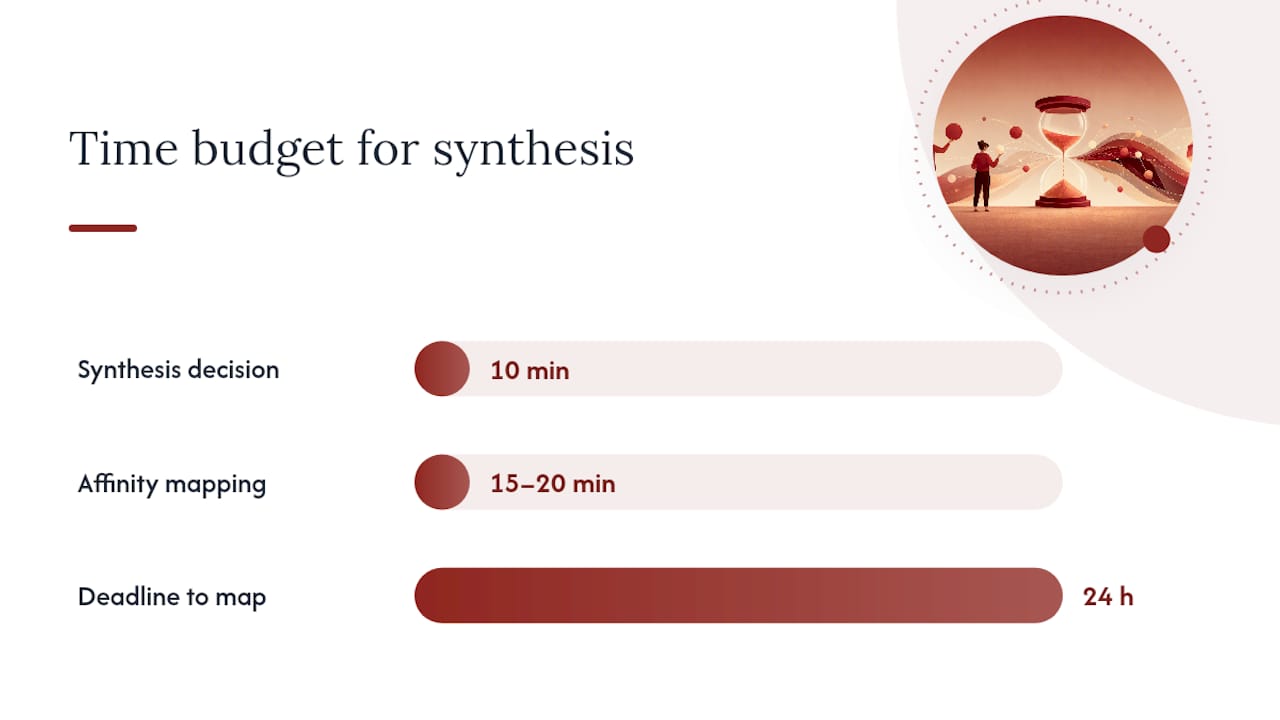
Right after the session, run a short affinity mapping exercise. Group every sticky note or comment by theme, not by who wrote it. Fifteen to twenty minutes is usually enough for a session with a handful of participants. Patterns show up fast: if multiple people independently flagged the same navigation confusion, that’s a signal worth acting on immediately, regardless of how it was phrased.
Once themes are grouped, prioritize with impact/effort for quick calls: high impact, low effort items go first, low impact and high effort items get parked. For anything genuinely contested, or when a product manager and a designer disagree on priority, use RICE (reach, impact, confidence, effort) to force the conversation into numbers instead of opinions.
Academic reviews of the critique process describe a generic process spanning preparation, conducting the session, and post-processing, and that third phase is exactly where most teams fall short. Post-processing isn’t a nice-to-have step. It’s the phase where feedback actually becomes a decision.
Document each decision with five fields: decision, rationale, owner, deadline, and a link to the source artifact (the Figma file, the recording, the sticky note board). A record without a link back to its source is a claim nobody can verify six months later.
- Affinity map within 24 hours, while memory of the discussion is still fresh
- Use impact/effort for anything the group already agrees on
- Reserve RICE for disagreements that need a numeric tiebreaker
- Every action item gets an owner and a deadline, not just a description
Four Ways Critiques Go Wrong (and the Fix for Each)
Most bad critique sessions fail in one of four predictable ways, and each has a specific, immediate fix.
Context vacuum: reviewers show up with no idea what problem the design solves, so feedback drifts toward personal taste. Fix: no critique starts without the 24-hour context share landing in advance. If it didn’t go out, push the meeting.
Solutionizing: someone jumps straight to “just make the button blue” instead of naming the underlying concern. Fix: the facilitator reframes it on the spot, the way Nielsen Norman Group recommends, turning the directive into a question the presenter can actually work with.
Bikeshedding: the group spends twenty minutes on font weight while the actual navigation problem goes unmentioned. Fix: name the scope out loud at the start, and when a tangent starts eating time, table it with a named owner rather than letting it run.
Abusive or overly personal critique: feedback starts targeting the person rather than the work, often under the guise of “just being honest.” Fix: the facilitator interrupts immediately, restates the comment about the artifact rather than the designer, and if it keeps happening, takes the conversation offline with that person after the session.
- Context vacuum → send the brief 24 hours ahead, no exceptions
- Solutionizing → facilitator reframes directives as questions in real time
- Bikeshedding → name scope upfront, table tangents with an owner
- Personal critique → facilitator interrupts and redirects toward the artifact
When a session ends with no clear next steps at all, that’s a facilitation failure, not a feedback failure. The fix belongs in the wrap-up segment of the agenda: nobody leaves the room until at least one decision or one named owner gets stated out loud.
How Often You Should Actually Be Running These
Critique is worth more early and cheaper early. Feedback on a wireframe costs a redraw. The same feedback on a built, tested feature costs a sprint. Practitioner research backs this up directly: teams get the most value from critiques run frequently during intense iteration, sometimes daily, because early changes are nearly free and late changes are expensive.
A reasonable cadence by stage:
- Early discovery: daily pair critique, informal, a brief period
- Active iteration sprints: regularly scheduled standard or silent critiques with the full team
- Pre-release sign-off: periodic cross-functional review with engineering and product in the room
- Mature, stable products: cadence can stretch to less frequent reviews, as the cost of missed issues decreases once patterns are established
Scale cadence with velocity, not with the calendar. A team shipping three variations a week needs critique closer to daily. A team maintaining a stable product with occasional updates can run biweekly without losing much. The mistake is picking a fixed cadence and never revisiting it as the work changes shape.
Why the Post-Critique Recap Is the Part Everyone Skips
Most of what a critique produces disappears within a week. People remember the loudest opinion in the room, not the reasoning behind the quieter, more accurate one. A decision record fixes that, and it doesn’t need to be elaborate. Six fields cover it: context, alternatives considered, rationale, owner, due date, and a link back to the source conversation or artifact.
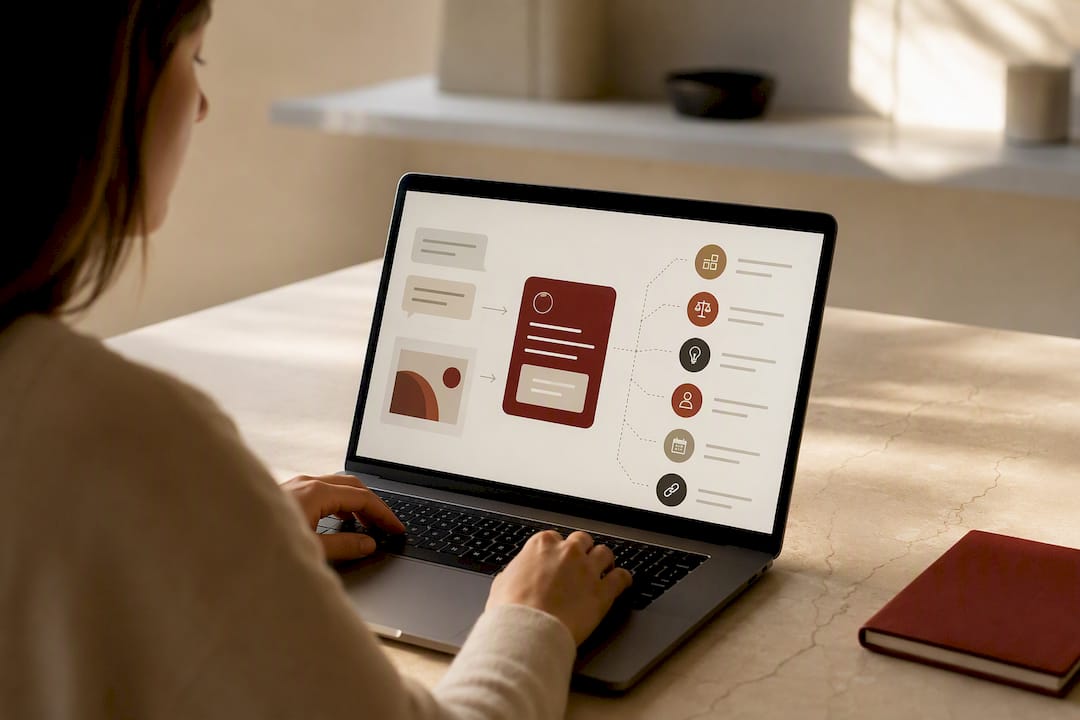
Practitioner guidance on running critiques consistently points to the same fix: assign a dedicated note-taker and send a 24-hour recap that names decisions, owners, and next steps. Teams that skip this step tend to re-debate the same question two or three sessions later, because nobody can point back to why a decision was made in the first place.
Structured records improve traceability specifically because they’re searchable and tied to a source. When a new hire asks “why does this flow work this way,” someone can point to a record instead of reconstructing the conversation from memory. Tools built for capturing decisions rather than just tasks treat this as the whole point: a decision without its rationale attached is a decision nobody can defend later, including the person who made it.
What One Small Process Change Actually Fixed for Us
The single habit that changed critique outcomes the most wasn’t a new format or a fancier agenda. It was making the 24-hour context share and a dedicated note-taker mandatory, with zero exceptions, for every session above pair critique size.
Before that, the same navigation debate came up in three separate sessions over two months, each time with slightly different people arguing slightly different versions of the same point, because nobody had written down what got decided the first time. After making prep and notes non-negotiable, that stopped. Not because the feedback got smarter. Because the record of what had already been decided was one search away instead of buried in someone’s memory of a meeting from six weeks earlier.
The measurable effect was fewer repeated debates and faster wrap-ups, since half of most sessions used to be spent re-establishing context that should have existed already. If you try one thing this week, make it this: before your next critique, write the context share, name a note-taker, and don’t let the meeting start until both exist.
, Rajas
Capture Every Critique Decision Before It Gets Lost
Specialized software can turn the recap you’re already supposed to be writing into something that actually happens every time, not just when someone remembers. It reads meeting notes, transcripts, and critique feedback, then produces structured records covering the decision, the rationale behind it, the owner, and any risk or open question left hanging.
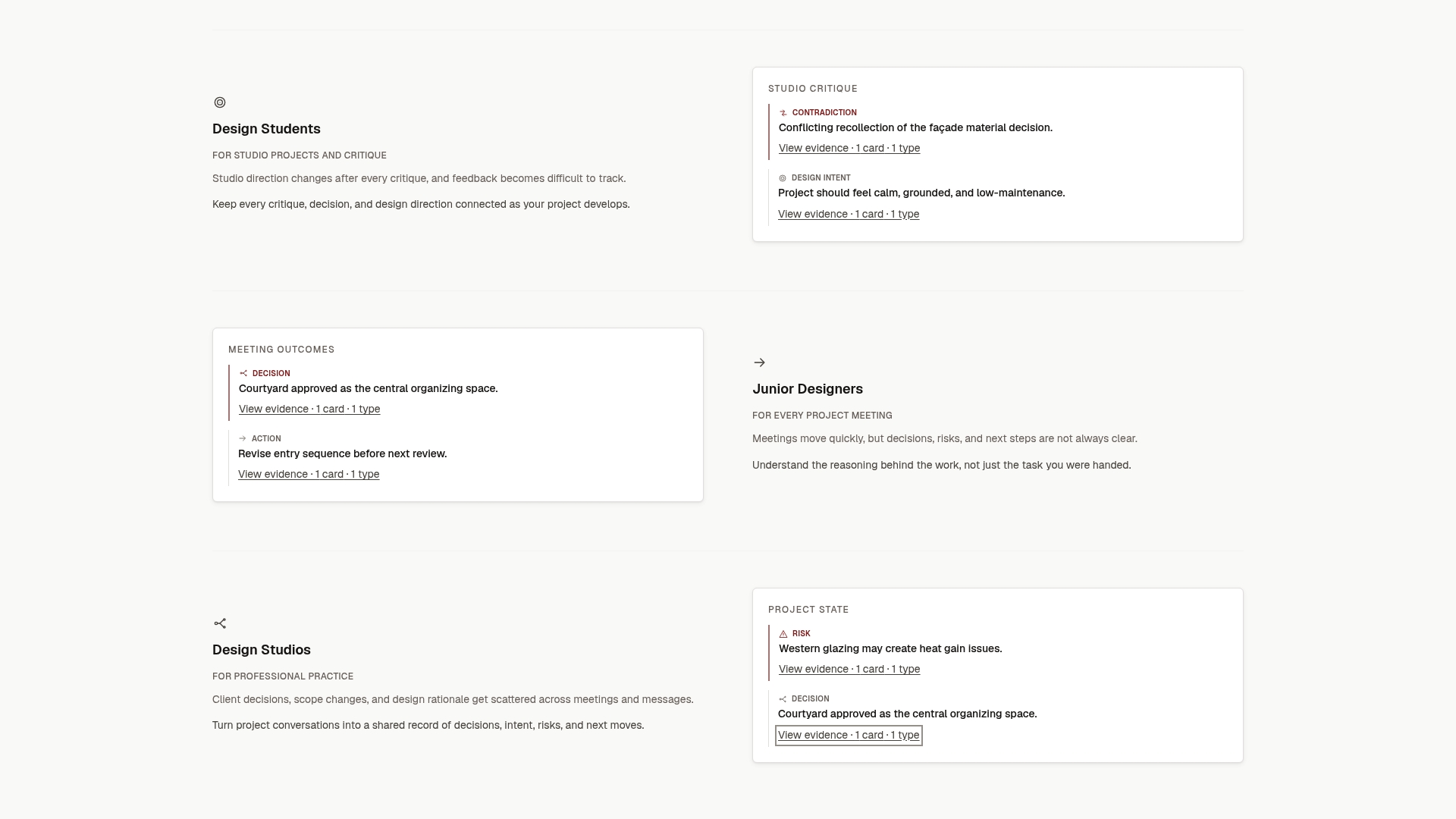
Instead of a note-taker manually chasing decisions across a dozen sticky notes and a Slack thread, some tools build the record automatically and link it straight back to the conversation it came from. That’s the piece most teams lose: not the feedback itself, but the traceable reason behind it. When the same debate threatens to resurface next quarter, someone can pull up the record instead of relitigating it from scratch.
If your team is still relying on memory and scattered docs to track why a design decision was made, see how Theintentledger works or check current pricing to start capturing critique decisions the same day.
Sources
- Design critiques: Encourage a positive culture to improve products
- Improving design critiques
- How to run a UI design critique